

Innovation & technologies
We translate environmental research into knowledge, technologies and evidence that drive innovation, inform policy and create tangible benefits for society through collaboration with academia, industry and public institutions.
From concepts to registrations
Our patents
Our patents protect innovative technologies developed at IDAEA, helping translate scientific discoveries into real-world applications.
Explore our pioneering solutions
Available softwares
Our software tools transform research into practical solutions, supporting environmental analysis, data interpretation and decision-making.
MCR-ALS Toolbox is a graphical user-friendly interface for the Multivariate Curve Resolution-Alternating Least Squares (MCR-ALS) algorithm.
This interface is designed to operate within the MATLAB® environment and incorporates the latest enhancements published for this algorithm, such as kinetic hard-modeling and correlation (calibration), and constraints that define the model structure for comprehensive multiset and multi-way data analysis.

Scientific research articles
- Jaumot, J., Gargallo, R., De Juan, A., Tauler, R. A graphical user-friendly interface for MCR-ALS: A new tool for multivariate curve resolution in MATLAB (2005) Chemometrics and Intelligent Laboratory Systems, 76 (1), pp. 101-110. DOI: 10.1016/j.chemolab.2004.12.007
- Jaumot, J., de Juan, A., Tauler, R. MCR-ALS GUI 2.0: New features and applications (2015) Chemometrics and Intelligent Laboratory Systems, 140, pp. 1-12. DOI: 10.1016/j.chemolab.2014.10.003
Developers

Introducing MSroi software, a one-for-all solution designed for the compression and pre-processing of mass spectrometry datasets. MSroi enables the analysis of a wide variety of mass spectrometry datasets obtained through various acquisition approaches, including direct infusion, hyphenated to a separation technique, or imaging.
Scientific research articles
Pérez-Cova, M., Bedia, C., Stoll, D.R., Tauler, R., Jaumot, J. MSroi: A pre-processing tool for mass spectrometry-based studies (2021) Chemometrics and Intelligent Laboratory Systems, 215, art. no. 104333. DOI: 10.1016/j.chemolab.2021.104333

MSident is a new MATLAB-based application designed to automate and accelerate chemical compound identification in complex environmental and biological mixtures. While chemometric workflows like ROIMCR are highly effective at resolving individual species from mass spectrometry (MS) data, manually filtering and matching these spectra against public repositories is traditionally a slow, labor-intensive bottleneck.
To solve this, MSident automates both the MS spectra filtering and the database identification process. Successfully validated across MS1, tandem MS/MS, and dual-ionization mode datasets, the app matches the high accuracy of manual searching but in a much more straightforward, user-friendly, and significantly faster workflow.
Download
Scientific research articles
Perez-Lopez, C., Ginebreda, A., Jaumot, J., Yamamoto, F.Y., Barcelo, D., Tauler, R. MSident: Straightforward identification of chemical compounds from MS-resolved spectra. (2024) Chemometrics and Intelligent Laboratory Systems, 245, 105063. DOI: 10.1016/j.chemolab.2024.105063
Developers

Carlos Pérez-López
External researcher
Antoni Ginebreda
External researcher
Damià Barceló
External researcher
Source Apportionment in a Python environment
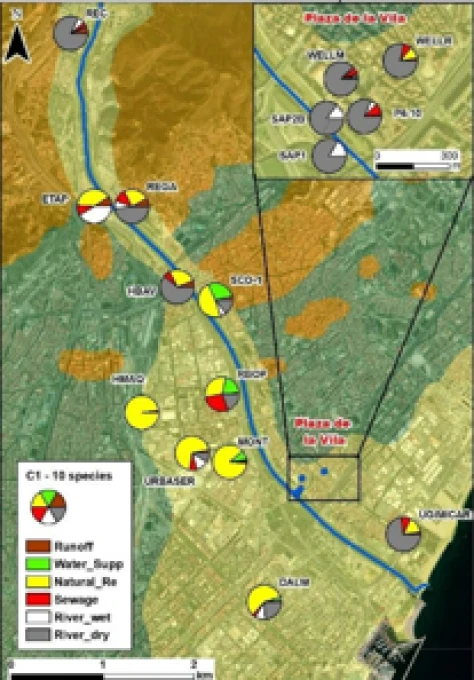
SOUPY is a key tool in the source apportionment method, that aims at identifying and quantifying the contributions of different pollution sources to groundwater. The advancement of SOUPY over previous source apportionment codes lies in the fact that it leverages Python’s advanced computational capabilities to enable management of more than 15 chemical parameters, 10 recharge sources and 99 observations points in the calculations. This is crucial when dealing with complex datasets and to get more accurate and realistic results.
In short, source apportionment using SOUPY involves:
- Conceptual model: A hydrogeological conceptual model representing the key factors influencing the groundwater composition, mainly the recharge sources (so-called endmembers) and hydrochemical processes, is developed. In urban environments common endmembers are: river, urban runoff, sewer filtration, etc.
- Collection of data: collection and chemical analysis of water samples from groundwater (mixed water) and recharge sources (e.g. river, road runoff, waste water leaks), or compilation of data from literature.
- Mixing model: Estimation of the contribution of each recharge source to the groundwater composition with the SOUPY code.
- Optimization process: SOUPY uses mathematical models to fine-tune the calculations, improving accuracy and reducing uncertainties.
Because SOUPY is built in Python, it can process more data than the previous source apportionment codes EMMA and MIX and adapt to new challenges by integrating additional analytical tools
Further information and purchase
For further information, questions and purchase inquiries of SOUPY source apportionment services, please contact: info@iaquant.com
Credits
This technology was developed within the frame of the UPWATER project (Understanding groundwater Pollution to protect and enhance WATER quality, Horizon Europe project No 101081807)
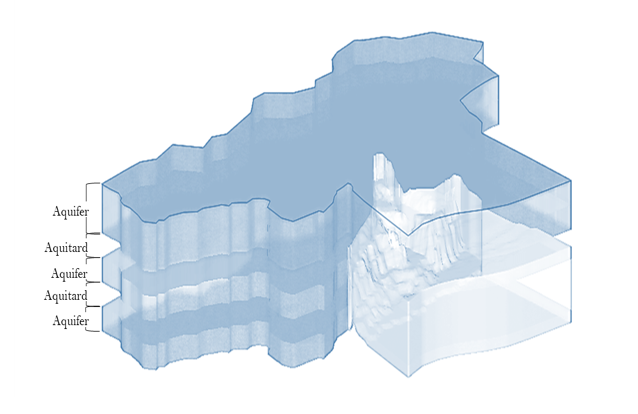
The Besòs groundwater flow model was developed for the broader area of interest (the metropolitan area of Barcelona) and considers the complex stratigraphy of the Besòs Delta basin. The vertical discretization comprises six layers of varying thicknesses. Layers 1 and 2 consist of the superficial aquifer, as delineated in the model boundary domain depicted in . This superficial aquifer extends down to layer 6, distinguishing itself from the Main and deep aquifers. An aquitard is present in layer 3. Layer 4 encompasses the Main Aquifer, layer 5 represents an aquitard, and layer 6 constitutes the Lower Aquifer.
The model consideres 71 hydraulic conductivity zones: 41 hydraulic conductivity zones in layer 1 (Collserola, Pla de Barcelona, Besòs alluvial aquifer, and Besòs superficial aquifer); 4 hydraulic conductivity zones in layer 3; 16 hydraulic conductivity zones in layer 4 (Primary Besòs Delta aquifer); 4 hydraulic conductivity zones in layer 5; and 6 hydraulic conductivity zones in layer 6 (Lower Besòs Delta aquifer). For the head boundary conditions, 13 zones are defined.
Further information and purchase
For further information, questions and purchase inquiries of groundwater modelling services, please contact: info@iaquant.com
Credits
This technology was developed within the frame of the UPWATER project (Understanding groundwater Pollution to protect and enhance WATER quality, Horizon Europe project No 101081807)
VolcanBox is a decision support platform designed to assess volcanic hazards. It integrates tools for analyzing hazards, vulnerability, and potential eruptive scenarios, facilitating collaboration among scientists, authorities, and civil protection agencies. Its goal is to anticipate future eruptions and help reduce their impact on the population and the territory.
VolcanBox App
Scientific research articles
- Martínez-Sepúlveda, M., Martí, J., López-Saavedra, M. VOLCANBOX: A software platform for volcanic hazard assessment. (2024) International Journal of Disaster Risk Reduction, 113: 104817. DOI: 10.1016/j.ijdrr.2024.104817
Developers


MultiriskBox is a software platform designed to assess and manage natural hazards. Representing the natural evolution of VolcanBox, and thanks to an innovative multi-risk approach backed by an integrated database, it allows for the standardization of heterogeneous information sources, the identification of correlations between different phenomena, and the analysis of hazards, vulnerabilities, and potential emergency scenarios. Additionally, it facilitates collaboration among scientists, authorities, and civil protection agencies, with the goal of anticipating natural events and supporting decision-making to reduce their impact on the population and the territory.
MultiRisk App
Developers
Innovation and Technology Transfer
Technologies & Prototypes
Several technologies developed at IDAEA are progressing through validation and technology transfer pathways, expanding opportunities for innovation and societal impact.
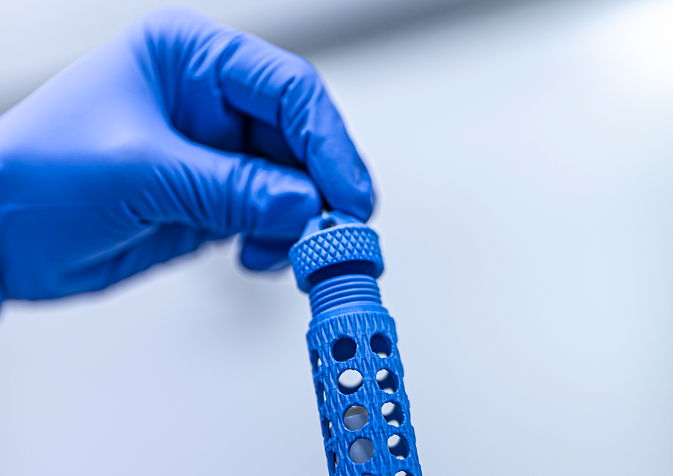
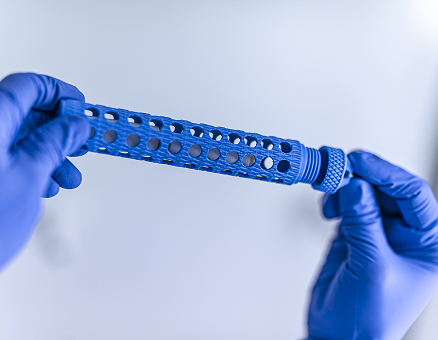
The Ceramic Passive Sampler (CPS) is a passive sampling technology developed at IDAEA-CSIC for the monitoring of organic contaminants in water. CPS is a durable ceramic device that is deployed in aquatic environments for extended periods, typically several weeks, during which it continuously accumulates a wide range of contaminants, including pharmaceuticals, pesticides, PFAS, and other contaminants of emerging concern. After retrieval, the accumulated contaminants are analyzed in the laboratory using chromatographic and mass spectrometric techniques. By integrating contaminant exposure over time, CPS provides more representative information than conventional grab sampling while reducing analytical costs and improving monitoring efficiency.
The technology has been successfully validated in various types of aquatic environments, and is currently being introduced to the market through the AWA Monitoring spin-off project, which aims to commercialize both the sampler and associated environmental monitoring services.
Website
Awards

This advanced device offers decentralized monitoring and sampling of urban runoff (rainwater) to support sustainable water treatment and blue-green infrastructures. Designed for high-readiness deployment (TRL 6-7), the system also enables efficient groundwater sampling and aquifer analysis in urban environments.
Researcher

This fully commercialized technology (TRL 9) provides advanced behavioral analysis methods for model organisms, such as Daphnia and zebrafish, integrated into biomedical devices. The system precisely measures organism responses to vibrational stimuli using a synchronized camera and specialized processing software.
Researcher
This validated technology (TRL 7) offers an innovative circular economy solution for copper metallurgical plants. It integrates the safe removal of arsenic by converting it into a highly stable and secure mineral phase, while simultaneously recovering valuable, high-demand raw materials—such as bismuth and antimony—directly from industrial waste streams.
