

Last November 12 and during Science Week, IDAEA organised its second edition of the IDAEA Open Day, welcoming the general public to engaging workshops about air pollution, toxicology, and green solutions for water pollution. Visitors were divided into two sessions, each with distinct itineraries tailored for adults and children. IDAEA researchers led discussions and explained the most up-to-date research on environmental issues impacting ecosystems, biodiversity, and human health.
Juliette Bedrosiantz, from the Environmental Toxicology group, conducted a workshop on the use of model organisms, specifically zebrafish and daphnia, for ecotoxicological studies. Attendees had the opportunity to observe these animals through binocular loupes, gaining valuable insights into their behavior and responses.
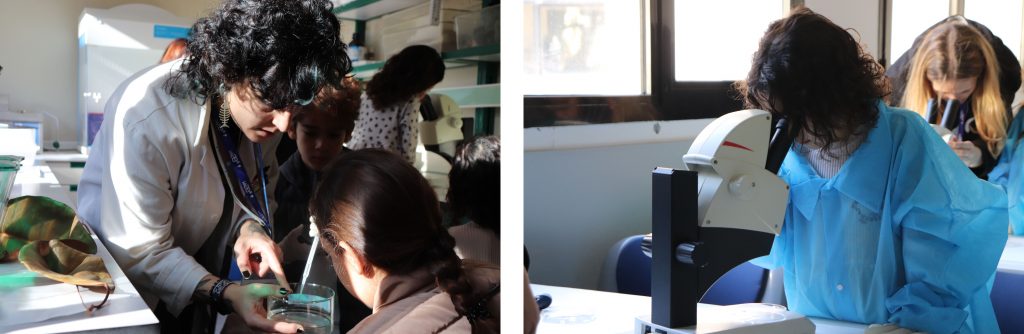
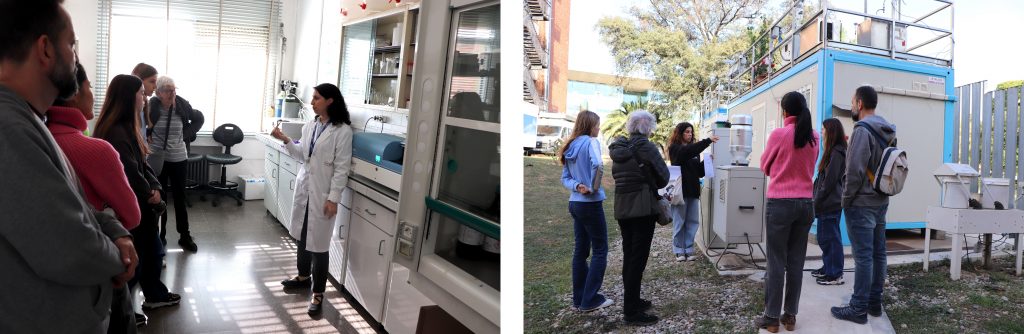
The workshop developed by Mercè Garí, from the Geochemistry and Pollution group, focused on human exposure to mercury, offering real-time analysis of attendees’ urine samples. This demonstration underscored the significance of reducing the intake of specific fish species for sensitive consumers, aligning with the recommendations from the Spanish Agency for Food Safety and Nutrition. At the same time, Marta Via, from the EGAR group, showed the air quality measurement station situated in the IDAEA garden. She illustrated how particular matter can impact our health and provided insights into practical measures to minimise impact.
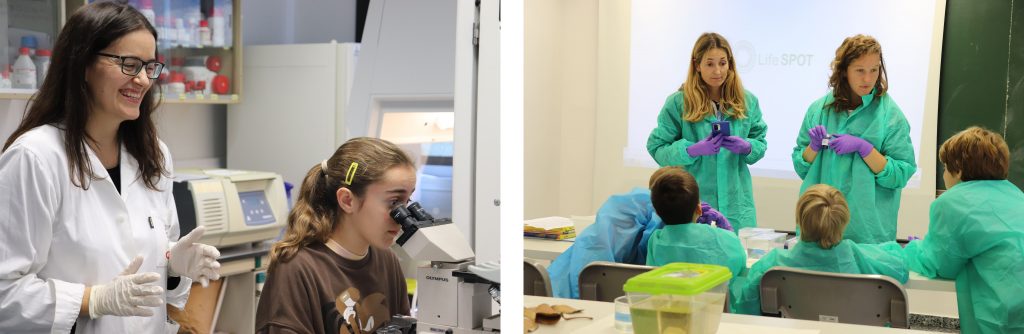
The researcher Carmen Bedia, from the Chemometrics for Environmental Omics group, explained the use of cell lines to assess the effects of contaminants. Working with cells provides the benefit of not using animals for these assessments. It also allows to analyse of many types of effects in a short period of time. Finally, the communication and outreach officers, Ana Sotres and Alicia Arroyo, conducted a workshop on the removal of groundwater pollution through microalgae, which is the main objective of the LIFE Spot project. Addressed to children, the LIFE Spot video used the stories of the Three Little Pigs and Little Red Riding Hood to convey the message of micro algae as a sustainable solution to remove nitrates, antibiotics and other pollutants from groundwaters.
—–
Ayuda «Excelencia Severo Ochoa» CEX2018-000794-S financiada por MICIU/AEI/10.13039/501100011033
 |Last November 12 and during Science Week, IDAEA organised its second edition of the IDAEA Open Day, welcoming the general public to engaging workshops about air pollution, toxicology, and green solutions for water pollution. Visitors were divided into two sessions, each with distinct itineraries tailored for adults and children. IDAEA researchers led discussions and explained the most up-to-date research on environmental issues impacting ecosystems, biodiversity, and human health.
Juliette Bedrosiantz, from the Environmental Toxicology group, conducted a workshop on the use of model organisms, specifically zebrafish and daphnia, for ecotoxicological studies. Attendees had the opportunity to observe these animals through binocular loupes, gaining valuable insights into their behavior and responses.
The workshop developed by Mercè Garí, from the Geochemistry and Pollution group, focused on human exposure to mercury, offering real-time analysis of attendees’ urine samples. This demonstration underscored the significance of reducing the intake of specific fish species for sensitive consumers, aligning with the recommendations from the Spanish Agency for Food Safety and Nutrition. At the same time, Marta Via, from the EGAR group, showed the air quality measurement station situated in the IDAEA garden. She illustrated how particular matter can impact our health and provided insights into practical measures to minimise impact.
The researcher Carmen Bedia, from the Chemometrics for Environmental Omics group, explained the use of cell lines to assess the effects of contaminants. Working with cells provides the benefit of not using animals for these assessments. It also allows to analyse of many types of effects in a short period of time. Finally, the communication and outreach officers, Ana Sotres and Alicia Arroyo, conducted a workshop on the removal of groundwater pollution through microalgae, which is the main objective of the LIFE Spot project. Addressed to children, the LIFE Spot video used the stories of the Three Little Pigs and Little Red Riding Hood to convey the message of micro algae as a sustainable solution to remove nitrates, antibiotics and other pollutants from groundwaters.
—–
Ayuda «Excelencia Severo Ochoa» CEX2018-000794-S financiada por MICIU/AEI/10.13039/501100011033


