Environmental challenges in cosmetics and hygiene products take centre stage at PLASTIC’2026

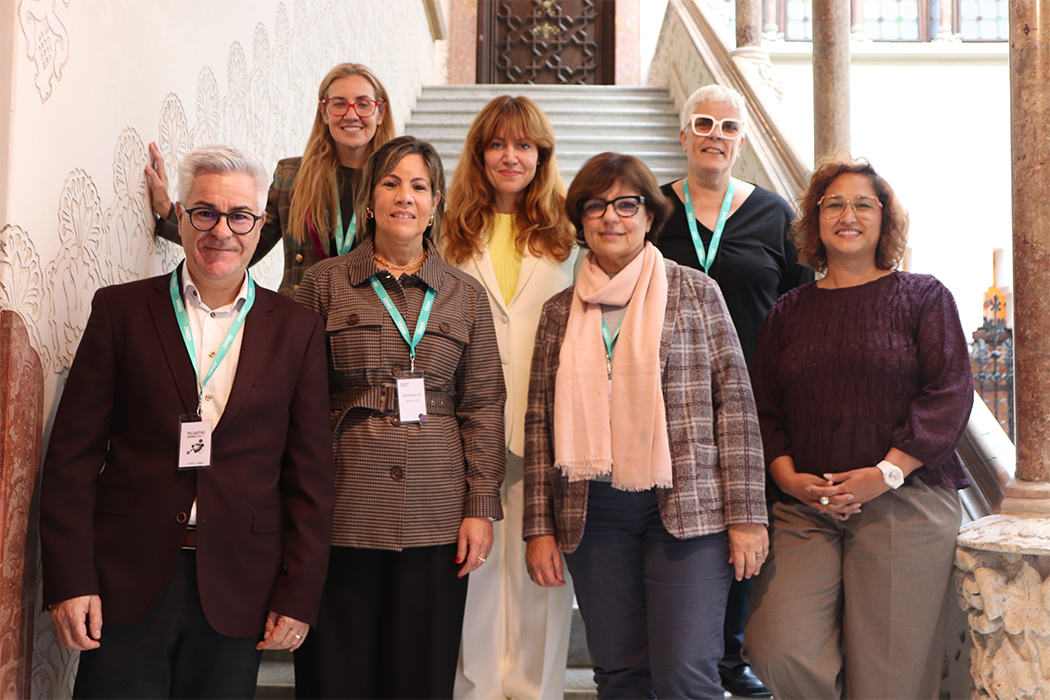
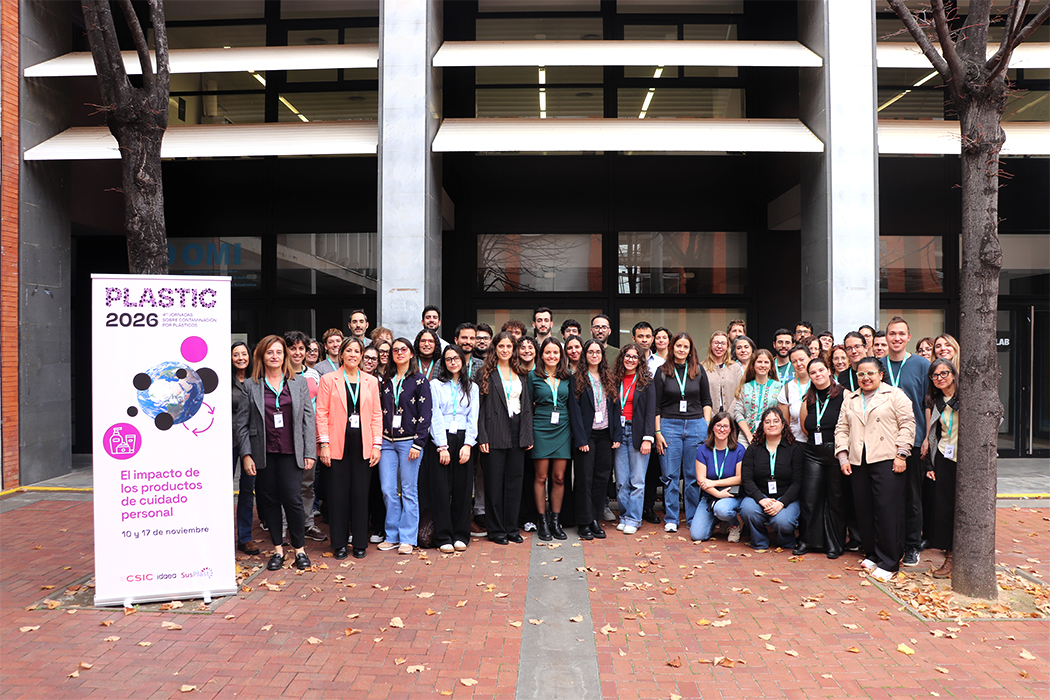
The Institute of Environmental Assessment and Water Research (IDAEA-CSIC) has held the fourth edition of its Conference on Plastic Pollution (PLASTIC’2026), which this year focused on the environmental and human health impacts of plastics in personal care and hygiene products. The event brought together representatives from the scientific community, industry and public administrations to analyse the main challenges facing the sector and initiatives aimed at reducing its impact.
The first day, held on 10 November at Palau Macaya in Barcelona, addressed issues such as packaging, recycling, circularity and alternatives to plastics, waste management and human exposure to chemical substances.
Personal care products are part of our everyday lives, but they also generate significant amounts of waste. According to data from the Ellen MacArthur Foundation, the cosmetics sector produces around 120 billion packaging units worldwide every year, many of which are single-use and difficult to recycle. In addition, hygiene products such as nappies, wet wipes and menstrual products pose significant environmental challenges due to their composition and waste management.
Challenges and initiatives from industry
Melissa Torres, Director of People and Sustainability at Beauty Cluster, opened the series of presentations with an industry perspective, exploring changes in consumer behaviour and regulation and their influence on the business landscape.
“Sustainability is a topic of growing interest among consumers, with 64% considering it important to reduce excess plastic in packaging, according to AECOC. However, purchasing decisions are influenced by other factors that may conflict with this concern, such as consumption habits or economic considerations,” said Torres.
Another challenge facing the industry is the perception of quality and the brand identity that packaging conveys, which directly conflicts with the need to design much simpler, lighter and more circular packaging. In this regard, the Beauty Cluster representative addressed one of the overarching themes of the conference: recycling. According to Eurostat, 35.9 kg of plastic waste per capita was generated in the European Union in 2024, of which 42.4% was recycled. “Packaging circularity and recycling present technical, economic and logistical challenges at every stage.”
The new European Packaging and Packaging Waste Regulation (PPWR) introduces requirements for recyclability, recycled content and reductions in packaging weight and volume. However, adapting products to these requirements involves overcoming technical and economic challenges, such as ensuring the availability of recycled materials, their compatibility with cosmetic formulations and the adaptation of industrial processes.
“We cannot assess the sustainability of packaging based on a single characteristic. We need scientific tools such as life cycle assessment, which allow us to compare impacts by considering the entire system,” Torres explained.
Delia García, Director of Sustainability and Positive Impact at L’Oréal Spain and Portugal, focused her presentation on circularity and the company’s initiatives to move towards more sustainable production and consumption models.
In its pursuit of greater circularity, the brand presented one of its main initiatives: refillable packaging, which reduces the amount of materials used.
“Over the past four years, we have quadrupled our range of refillable products, and in 2025, refill sales increased by 34%,” said García.
She also highlighted the importance of distinguishing between designing packaging to be recyclable and ensuring that it is actually recycled. This requires effective collection and recycling systems, as well as markets for recovered materials.
Is plastic-free cosmetics possible?
This was one of the questions raised by Sara Werner, founder and CEO of COCUNAT, during her presentation. Werner addressed this issue from the perspective of business innovation and the toxic-free philosophy that the brand has championed since its creation.
In addition to the challenges posed by plastic recycling, another challenge arises when adopting a toxic-free approach.
“Cosmetics is chemistry, and interactions between compounds, including those in packaging, must be carefully considered,” said Werner. “A good environmental solution does not necessarily guarantee a good industrial solution.”
Werner advocated four pillars for sustainable cosmetics: safety, traceability, efficacy and impact. “Less plastic does not always mean a lower impact,” she pointed out, referring, among other examples, to the replacement of fossil-based plastics with bio-based plastics and highlighting that the latter also generate waste. The ultimate goal must be to reduce waste generation.
Hygiene products and waste management
Beyond cosmetic packaging, absorbent hygiene products represent another major challenge. Gloria Codinas, representative of the EDANA Association in Spain, addressed the environmental impacts of these products and the outlook for the sector.
Regarding menstrual hygiene products, Codinas shared a particularly interesting figure: 70% of people who use reusable menstrual products combine them with single-use products. This highlights the need to develop solutions that meet consumers’ needs while seeking to minimise environmental impact.
One of the sector’s main areas of work is ecodesign, with the aim of reducing the amount of materials used without compromising product performance. According to data from the United Nations Environment Programme presented by Codinas, the incorporation of superabsorbent polymers and successive improvements in the design of baby nappies reduced their weight by between 60% and 75% between 1980 and 2020.
However, managing these products after use remains one of the sector’s major unresolved challenges.
“Bodily fluids account for 80% of the weight of these products. This is organic matter, which makes them difficult to recycle,” Codinas explained.
Montserrat Pineda, former Secretary for Feminisms at the Department of Equality of the Government of Catalonia, brought into the discussion the responsibility of public policies in ensuring the sustainability of menstrual hygiene products.
Pineda shared the experience of the Comprehensive Plan for Menstrual and Climacteric Equity (2023–2025), which promoted the free distribution of reusable menstrual products through Catalan pharmacies. The initiative sought to reduce waste generation and tackle menstrual poverty by ensuring access to these products and freedom of choice.
“When we talk about menstrual poverty and menstrual products, we must also do so within a rights-based framework,” said the former secretary, who also highlighted the importance of access to information and menstrual health education.
Another issue addressed by Fernando Cabello, Director of Water Cycle Services at the Barcelona Metropolitan Area (AMB), was the impact of wet wipes on sewerage and wastewater treatment systems.
Cabello explained that these waste products reach wastewater treatment plants intact and accumulate and become entangled, blocking mechanical equipment. Interestingly, the problem began to grow around 2010, and labelling these products as “biodegradable” creates the false impression that they can be flushed down the toilet, when in fact they are not designed for this purpose.
“Around 3,300 tonnes of sanitary waste containing plastics are generated annually at the seven wastewater treatment plants in the Barcelona metropolitan area, 65% of which consists of wet wipes,” said Cabello. “This problem results in additional costs of between €17 and €20 million per year.”
Despite efforts to improve systems for retaining this waste, some wet wipes end up in rivers, on beaches and in the sea during rainfall events. Cabello stressed the need to design plastic-free products, improve their labelling, promote appropriate consumer habits and advance extended producer responsibility.
Plastic toxicity
The series of presentations concluded with Ethel Eljarrat, Director of IDAEA-CSIC and organiser of PLASTIC, who discussed exposure to toxic compounds present in menstrual products through dermal contact.
The researcher presented the conclusions of a recent study assessing the presence of conventional and alternative plasticisers in menstrual products, as well as their ability to transfer to the skin through dermal contact. In the case of organophosphate plasticisers, the results revealed that exposure through the use of these products may be similar to dietary exposure.
“Dermal contact through the use of menstrual hygiene products is a route of human exposure that should not be overlooked and should be studied in greater depth, as is the case with other better-known and more widely studied exposure routes, such as diet,” said Eljarrat.
Among the products analysed, menstrual cups showed the lowest release of plasticisers and the lowest environmental impact associated with these contaminants.
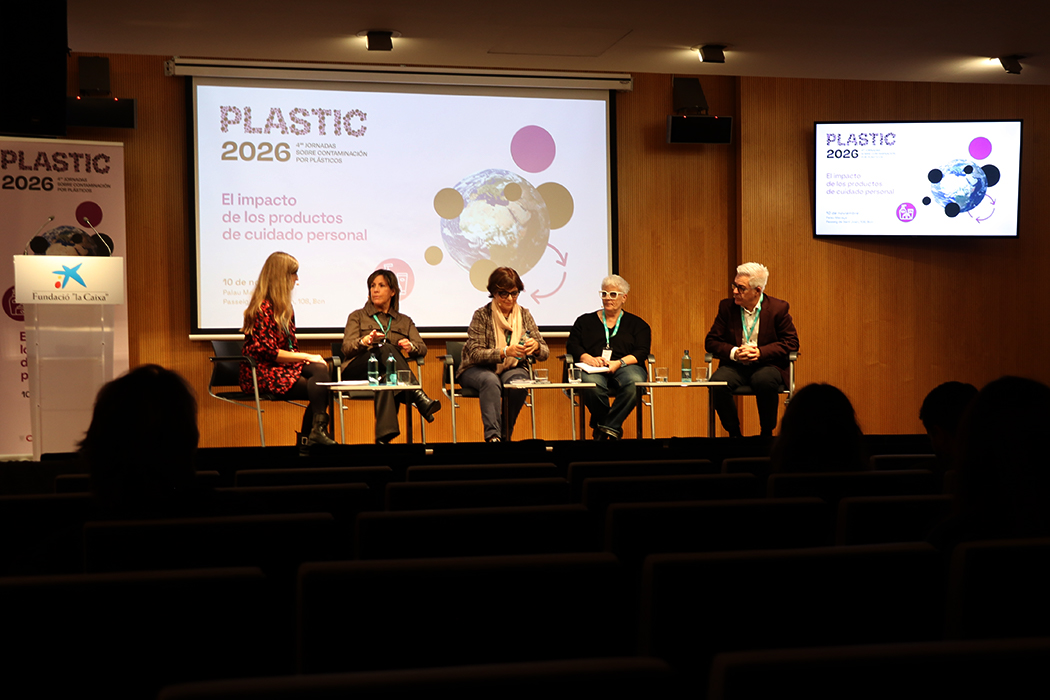
The first day concluded with a roundtable discussion moderated by Georgina Pujol, a TV3 journalist specialising in the climate crisis, which highlighted the need for closer collaboration between the scientific community, industry and public administrations. The discussion also questioned the extent to which responsibility for reducing pollution from plastics and their additives should fall on citizens, focusing on the role of regulation and product design.
PLASTIC’2026 continued on 17 November at the North Campus of the Universitat Politècnica de Catalunya (UPC) with a scientific session dedicated to sharing the latest advances in research on plastic pollution. The session featured a keynote lecture by Marinella Farrè, researcher at IDAEA-CSIC, who discussed the challenges of microplastics analysis and the implications for human exposure.