

Alliança Magnet
Magnet
A curious look, an opportunity to learn
IDAEA-CSIC and Escola Mas Falcó (formerly Escola Pare Poveda) have joined forces through a Magnet partnership to promote science and environmental awareness in the classroom. Over four years, this collaboration aims to spark curiosity, critical thinking, and a commitment to sustainability among students.
“Magnet, Partnerships for Educational Success” is a program promoted by the Department of Education and Vocational Training of the Government of Catalonia, the Bofill Foundation, and the Institute of Educational Sciences at the UAB, in collaboration with the Barcelona Education Consortium.
Project Manager
Featured activities
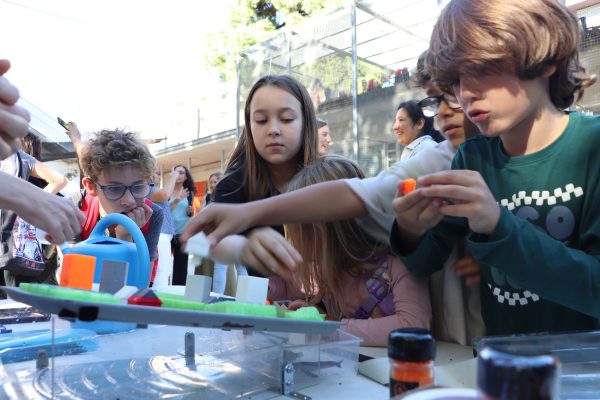
Research on contaminants and the water cycle
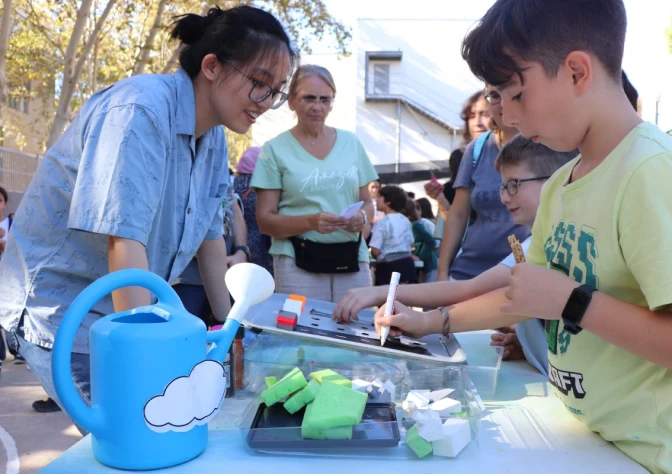
6th-grade students conducted research on the presence of environmental contaminants in their neighborhood, based on surveys carried out with their families and neighbors. The results were shared at the school during the Nit de la Recerca 2024 (2024 Researchers’ Night): “Veig, veig… tots els contaminants?”, during a special event that also featured the IDAEA-CSIC research team, who offered workshops on the water cycle for all students and their families.

Microorganisms at school
6th-grade students also collected samples from different corners of the school and, through observation and analysis, discovered that microorganisms are everywhere. Through this hands-on experience, students got a taste of scientific work and learned that not all microorganisms are harmful: many are harmless and even beneficial.
Exploring a nearby ecosystem: the Collserola forest
5th-grade students investigated environmental conditions in Collserola Natural Park—such as humidity, light, temperature, and flora—to answer a key question: “Could a wildfire like the one in Los Angeles happen in Collserola?”. The results of their study were shared publicly at the 12th Science Congress “El bosc batega”, held on May 15, 2025.

Air pollution and the quality of the school environment
4th-grade students became “air guardians” by measuring concentrations of inhalable particles with a diameter under 2.5 µm (PM2.5) in different areas of the school, as well as classroom ventilation using CO₂ concentration levels. They also calculated the pollution generated by different modes of transport. Through their research, they reflected on the impact of air pollution on daily life and health, and gained an understanding of the importance of maintaining good air quality and ventilation in indoor spaces.
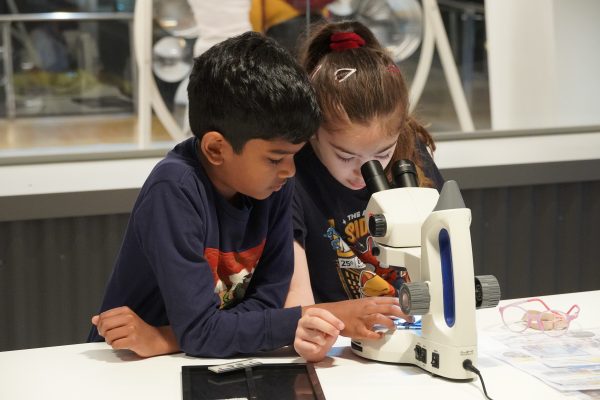
Micrarium at CosmoCaixa
3rd-grade students had the opportunity to discover the fascinating microscopic world around us: tissues, small animals, and other microorganisms present in water. They did so using microscopes and binocular magnifiers at CosmoCaixa, allowing them to observe details that usually go unnoticed. They experienced what it feels like to be real scientists while learning alongside paleoclimate experts. Together, they carried out experiments and understood how samples are extracted to study past climate and better comprehend the changes our planet has undergone over time.
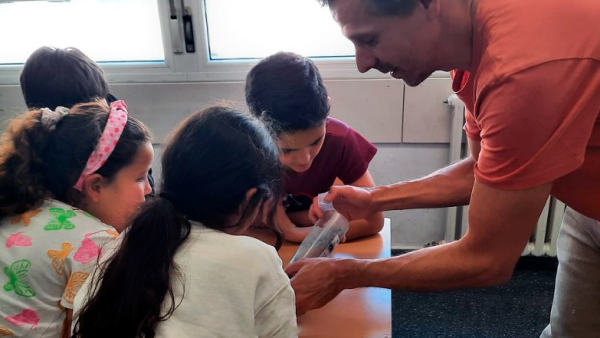
The importance of groundwater
4th-grade students attended a talk on the importance of groundwater, as it is the largest accessible freshwater reserve. They also conducted experiments to discover how water flows in aquifers, how water is extracted from wells, and why freshwater is a scarce resource we must protect.

Science with zebrafish
Through the observation of zebrafish, 2nd-grade students explored the advantages of using this animal in science -specifically in environmental toxicology- given its small size, transparency, and genetic similarity to humans. Additionally, kindergarten (I5) children were able to observe the early stages of zebrafish embryonic development and its surprising similarities to human infant development.
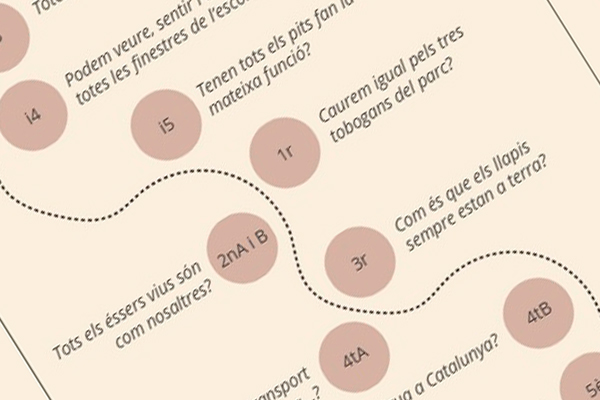
Magnet Fair
Over the course of an open day for families and the educational community, the scientific projects developed throughout the school year were presented. An interactive fair led by the students themselves, who shared what they learned in a creative way through hands-on, engaging classroom activities.