

Innovative solutions for decontamination and circular economy
This research line connects environmental remediation with secondary resource recovery, turning pollution mitigation into an active driver for circular resource generation.
It contributes to:
Our research initiatives are structured in 4 pillars:
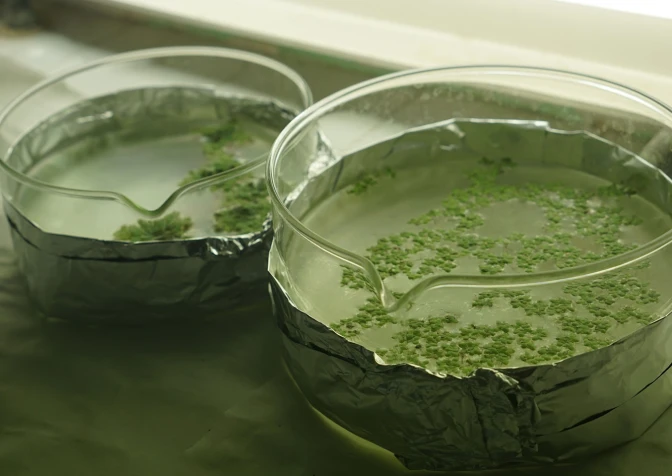
Integrated environmental remediation systems. We develop nature-based and engineered strategies (bio-based, hybrid, and nanostructured solutions) for pollution remediation across urban, agricultural, and aquifer systems. We also advance treated wastewater reuse via Soil Aquifer Treatment (SAT) and Managed Aquifer Recharge (MAR) systems enhanced with reactive barriers to improve water quality and restore aquifer functions.
Resource recovery from industrial and mining systems. We recover critical raw materials and key metals (such as copper, lithium, gallium, and rare Earth elements) from industrial and mining waste streams. Through advanced modelling and process engineering, we enable selective separation and recovery, transforming secondary streams into valuable resources while preventing contaminant recirculation under a One Health perspective.
Coupled environmental–industrial systems for circularity. We investigate the interfaces between environmental compartments and industrial systems to close material loops across water, soil, and industrial value chains. We co-design remediation and resource recovery to turn pollution liabilities into circular opportunities.
Scientific support and implementation pathways. We combine advanced modelling, chemometrics, and process engineering tools with strong stakeholder and policy engagement. This ensures the translation of our scientific advances into operational, scalable solutions aligned with European sustainability goals.
Coordinators

Patricia Córdoba Sola

Víctor Matamoros Mercadal
Key Research Projects
Our team
The multidisciplinary team behind the science







Our publications
Latest scientific contributions
Optimizing the recovery of rare earth elements from acid mine water: A sustainable approach using selective precipitation
Cleaner Engineering and Technology — 2026 — DOI: 10.1016/j.clet.2025.101123
Intrusions saharianes a Europa
"una Conversa Sobre Pols" dust Pavillion – Fundació Mies Van Der Rohe – Fundació Miró, En el Marco de la Capital Mundial de L’arquitectura Barcelona 2026. — 2026 — DOI: CSIC-GB1114091
Local climate zones as predictors of NO2 in Barcelona: Towards healthier and more sustainable cities
City and Environment Interactions — 2026 — DOI: 10.1016/j.cacint.2026.100374
Microscopic Insights into Firework- and Biomass-Burning-Derived Haze Particles during the Diwali Festival in Delhi, India
Environmental Science & Technology — 2026 — DOI: 10.1021/ACS.EST.5C16031
Geochemical partitioning of As and Sb in deposited dust from coal mine vents: Implications for mobility and ecological risk
Journal of Hazardous Materials — 2026 — DOI: 10.1016/j.jhazmat.2026.142619
