

Environmental intelligence
This research line advances environmental intelligence methods by providing cross-cutting AI, data integration, modelling, and computational tools to improve predictive analytics and decision-making across all research lines.
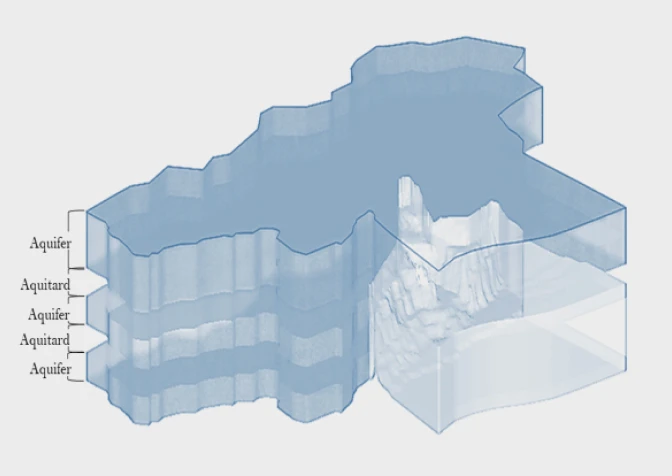
It contributes to:
Our research is focused on:
Environmental data integration and predictive modelling. We develop advanced computational frameworks that integrate monitoring data, remote sensing, multi-omics, and environmental simulations. These tools support comprehensive predictions of environmental processes, ecosystem responses, and human exposure.
AI for environmental and hydrogeological processes. We advance AI-assisted and hybrid process-based models to improve the forecasting and representation of hydrological, biogeochemical, and environmental processes across multiple scales.
Explainable and trustworthy AI. We develop interpretable AI and machine-learning approaches to improve model transparency, robustness, and reproducibility. This provides reliable scientific evidence for environmental risk assessment and regulatory frameworks.
Digital Twins and smart environmental monitoring. We combine smart sensing technologies, real-time observations, and predictive analytics to build Digital Twins. These platforms enable early warning, scenario analysis, and proactive risk management for environmental hazards.
Environmental software and decision-support systems. We create interoperable software platforms and decision-support tools that translate complex monitoring, modelling and assessment data into actionable science for policy and sustainable environmental management.
Coordinators

Joaquim Jaumot Soler

Enric Vázquez Suñé
Our team
The multidisciplinary team behind the science



Our publications
Latest scientific contributions
Inferring sedimentary basin structure from multitemporal InSAR mapping of urban land subsidence: the Vallès Basin (Barcelona, Spain)
Journal of Maps — 2026 — DOI: 10.1080/17445647.2026.2708361
Water balance assessment based on a three-dimensional transient groundwater modelling of a phosphogypsum stack in Huelva (SW Spain)
Journal of Hydrology: Regional Studies — 2026 — DOI: 10.1016/j.ejrh.2026.103842
Density-dependent groundwater flow and hydrogeological response to brine extraction and reinjection in salt flat
2026 — DOI: 10.5194/egusphere-egu26-18523
Groundwater Quality Degradation and Nitrate Transport in a Mediterranean Aquifer System: Synergistic Effects of Extreme Drought and Anthropogenic Pressures (Barcelona Province, Spain)
2026 — DOI: 10.5194/egusphere-egu26-18982
Implementation of hydrogeological and geochemical models in new strategies for Li extraction in salt flat
2026 — DOI: 10.5194/egusphere-egu26-19892
