

Global change, biodiversity and ecosystem functions
This research line investigates how global change drivers, such as climate change, pollution, and land-use pressures, affect biodiversity and ecosystem functioning. By analyzing these impacts across terrestrial, freshwater, marine, and polar environments, it tracks critical alterations in global biogeochemical cycles.
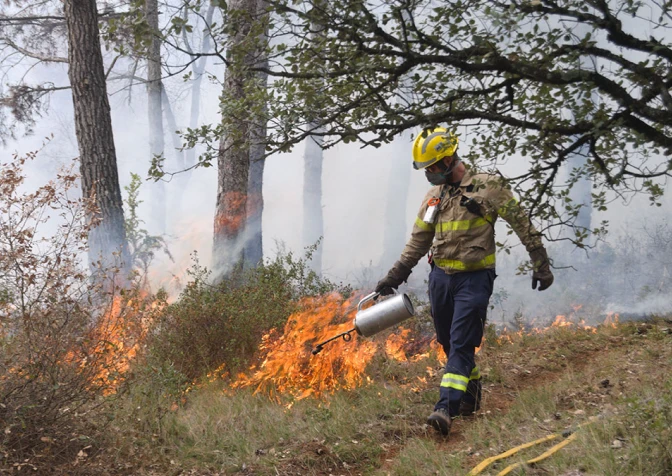
It contributes to:
- Environmental Chemistry
- Toxicology and Environmental Impacts
We integrate field observations, experiments, and predictive Earth-system frameworks to assess how ecosystems adapt to pollution and climate change. Focusing closely on marine environments, microbiome-driven processes, and vulnerable regions, we track how human activities alter the natural world.
Our research focuses on four key areas:
Global change impacts on ecosystem resilience: We investigate how the combined pressures of climate change, pollution, land-use, and extreme weather affect biodiversity and ecosystem health across land, freshwater, marine, and polar systems, aiming to identify critical ecological tipping points.
Biogeochemical processes and contaminant dynamics: We assess how microbial and natural processes drive pollutant degradation, bioaccumulation, and organic matter cycling. Through this, we develop microbiome-based strategies to clean up contaminants, especially in vulnerable marine and high-altitude aquatic systems.
Earth system dynamics and environmental reconstruction: We combine long-term observations with paleoclimate records, and multi-scale environmental datasets to better understand environmental variability over time, reconstruct past climate responses, and detect early warning signals of abrupt environmental changes.
Predictive frameworks for climate adaptation and ecosystem management: We develop predictive and policy-relevant frameworks using environmental records from marine, polar, and high-mountain environments to support biodiversity conservation, sustainable management, and effective climate adaptation strategies.
Coordinators
Maria Vila Costa

Barend L. van Drooge
Key Research Projects
Life Aqua Trito
GAMBIA
ROMAC
Life Resque AlPyr
Our team
The multidisciplinary team behind the science







Our publications
Latest scientific contributions
Contrasting neurotoxic pathways triggered by PM10 in relation with organic molecular markers in suburban and rural sites in Catalonia
Environmental Pollution — 2026 — DOI: 10.1016/j.envpol.2026.128961
Unveiling primary and secondary sources of PM2.5 in a Chinese megacity using detailed organic and inorganic speciation and receptor modelling
Environmental Pollution — 2026 — DOI: 10.1016/j.envpol.2026.128629
LIFE RESQUE ALPYR: Ecological Restoration of High Mountain Lakes in the Pyrenees by Fish Removal
Proceedings — 2026 — DOI: 10.3390/proceedings2026146119
Atmospheric polycyclic aromatic hydrocarbon and black carbon concentrations and sources in primary schools and homes in a changing Mediterranean urban environment
Atmospheric Environment — 2026 — DOI: 10.1016/j.atmosenv.2026.122019
Exposure concentrations of PAHs in firefighters during wildland fires, and neurotoxic effects in brain cells models
2026 — DOI: 10.5194/egusphere-egu26-22491
